In mechanical engineering, efficiency, precision, and smooth processes are essential. However, especially when capacities become limited, a key question arises: Which processes can be meaningfully outsourced and where does pre-assembly create real added value?
A Practical Example from Our Daily Project Work
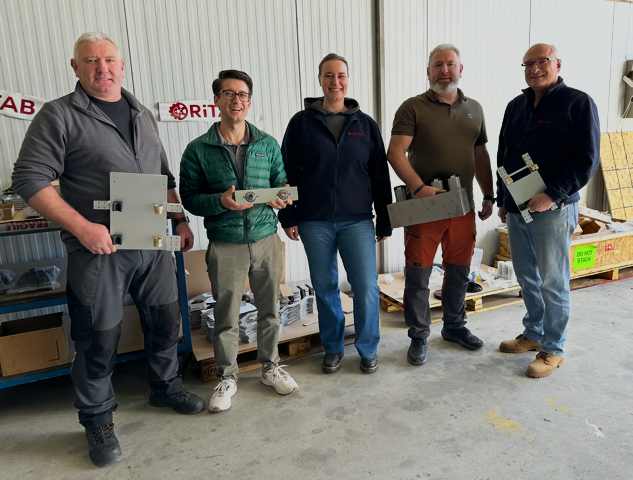
In March, we had the opportunity to support an American customer who needed to outsource part of their assembly processes due to capacity constraints.
Our task was to pre-assemble four different subassemblies so that they could be directly integrated into the customer’s machines.
What Made This Project Special
The success of this project was mainly driven by three key factors:
- Close and collaborative partnership – even across borders
- Direct and efficient communication
- Hands-on, on-site training at our facility, provided by the customer
The Result
Through this well-coordinated collaboration, we were able to achieve excellent results:
- Smooth downstream processes
- Maximum precision and perfect integration
- Noticeable relief for the customer’s production team
Last but not least, the project was also a great success internally: diverse, hands-on, and carried out with strong team motivation.
When Is Pre-Assembly Particularly Beneficial?
Our experience shows that pre-assembly is especially valuable when:
- Time is a critical factor
- High precision is required
- Interfaces need to be reduced and clearly defined
This approach is particularly efficient when the majority of components are already manufactured in-house and only a few additional parts need to be integrated.
Our Approach: Everything from a Single Source
We deliberately rely on a holistic approach:
- Manufacturing
- Surface finishing
- Pre-assembly
Your benefits:
- Fewer interfaces
- Reduced coordination effort
- Increased process reliability